So Many Books, So Little Time

As often as I have seen that sentiment on t-shirts and mugs or Facebook walls, it didn’t really hit me until a few months ago how true it is.  When I walk into a bookstore or a library now, all I can think about is the fact that the shelves are lined with thousands of books that I will never get to read.  Of course, some of them are probably boring.  I don’t regret those.  But even taking out the boring and the bad, I find it depressing when I think about how many wonderful, possibly life-changing books will never even enter my awareness.  And when I think about launching my babies into that world where they can so easily get lost in the crowd…well, let’s just say it’s disheartening.

When I was a kid, I read so voraciously that I would finish every book I started, and sometimes even reread books I disliked, just because they were there.  Sometimes I want to go back in time and smack that kid and give her a booklist to work through during all those lazy childhood hours.  Don’t get me wrong – some rereads would be fine.  She could keep her yearly Christmas vacation reread of The Lord of the Rings, which inevitably ended in 2 am bawling as Frodo sailed from the Grey Havens.

I felt guilty when I first jettisoned my rule about finishing every book I started, but there are just too many wonderful books in the world to waste time on something that doesn’t delight me.  And that’s what every reader is chasing, isn’t it?  That sense of delight, of being transported out of our everyday lives.  That can’t-put-it-down, can’t-wait-to-get-back-to-the-car-so-I-can-continue-the-audiobook preoccupation with a fictional world.

When I think about my own stories, it almost seems too much to ask, to be able to create that feeling for someone else.  It feels presumptuous to hope that someone might love my fantasy worlds the way I love Middle Earth or Hogwarts or Eddis, Sounis, and Attolia, to even conceive that somehow someone might find my little books among all the other wonderful stuff out there.

But I keep on reading, even though my reading list will never end.  And I’ll keep on writing, hoping even one person out there will find something transporting in it.  Because, I don’t know about you, but I just can’t seem to give up on looking for magic.
 

If My Life Were a Movie…

…this is the song I would want playing over the closing credits: “The Hard Way” by Mary-Chapin Carpenter.  Especially this part:

Have a little trust in us when fear obscures the path
You know we got this far, darling, not by luck, but by never turning back
Some will call on destiny, but I just call on faith
That the world won’t stop, and actions speak louder
Listen to your heart, to what your heart might say
Everything we got, we got the hard way.
 

and this part:

We’ve got two lives, one we’re given, and the other one we make…
 

Oh, just let Mary-Chapin Carpenter tell you:

http://www.youtube.com/watch?v=KjI1OXZdyZM

What the Heck is a Line Edit?

My good friend Megan Morrison published a wonderful article on her blog a few days ago entitled “The Editorial Process: A Guide for the Friends and Family Members of Writers“.  This is highly recommended reading for anyone who has ever wondered why your friend who had sold a book is still working on the same one months or even years after the sale.

The only thing I would add to Meg’s excellent article is Stage 3.5: Waiting for the Official Announcement.  This is the time after the book has been purchased and the author has signed a contract, but the publisher has not yet put out the official press release announcing the deal.  This can be a pins-and-needles time for author, since she just wants to shout to the world, “I HAVE A BOOK DEAL!”, but can’t do so yet, and even if she did, no one would really believe it because there is no proof anywhere just yet.

I mean, I imagine that it’s a frustrating time.  Just saying.

Pressure

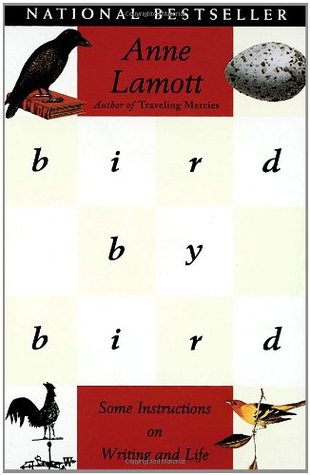
So I know that I am coming late to the party with this, but I finally got around to reading the much-recommended Bird by Bird: 12543Some Instructions on Writing and Life by Anne Lamott (New York: Random House, 1995).  I started out reading a library copy, and after finding something on every other page that I wanted to highlight, I gave up and bought a copy.  After about two chapters, I already knew that this was going to be a book that I wanted to keep on my desk and go back to again and again.

The thing is, Lamott doesn’t really cover anything you don’t already know as a writer – but her humorous insights give you permission to own up to those things you already know.   They make you feel a little less alone.  And if you’re a Type-A personality like me, they help take some pressure off.  I love her idea of the “1-inch picture frame”, or focusing only on the tiny little bit of story that you are working on right now, without getting bogged down by bigger questions.  This description, this interaction.   Because you’ve just got to get on with it.   As Lamott says: 

“And the story begins to materialize, and another thing is happening, which is that you are learning what you aren’t writing, and this is helping you to find out what you are writing.”

Yes!  So, see?  All my writing around the point?  Not wasted. 

I recently read a perfectly reasonable article in Writer’s Digest that made me want to throw the magazine across the room: “7 Steps to Creating a Flexible Outline for Any Story” by K.M. Weiland.  In it, Weiland advocates doing a great deal of up-front work in setting up the plot, characters, and setting of your story in outline form, so that you don’t waste time going down pointless paths later while writing.  Now, this is an admirable approach, and I am glad it works for her.  But I am Type-A, get-it-done, even-my-to-do-lists-have-to-do-lists kind of person, and even I felt it was a bit much.  I can’t imagine how a true “pantser” (those writers who plot by the seat of their pants) would react to it. 

Here’s the thing: I would love to be able to be that organized when it comes to developing a story, but that’s just not how it works for me.  Don’t get me wrong, I do a lot of planning up front – for my current work-in-progress, for example, I had an entire notebook full of character information, family trees, plot notes, research notes, and so on, before I put word one on the page.  But to me, it feels forced to try to jam all that into an outline too soon.  So much of the story reveals itself to me as I write it.  Even though I think I know the characters well, they tell me new things about themselves as I let them interact with other characters.  So for me it’s important to let those characters unfold that way, and let the plot flow from that.

Weiland’s article definitely has a lot of good stuff in it.  But I know that, for me, following it to the letter would be too confining.

And isn’t that what this writing thing is all about, anyway?  You have to find the approach that works best for you and keep at it.  Anne Lamott has a great quote about that too:

“You get your confidence and intuition back by trusting yourself, by being militantly on your own side.”

Amen, sister.


Writing Around the Point

Whenever I sit down to work on my novel in progress, I try not to think too hard about the fact that I am eventually going to cut 70-90% of what I write on any given day.  It’s painful to think about, even if it’s necessary.

So it’s weird that I have totally embraced another writing technique: writing outtakes.  For my current work in progress, I have written nine different outtakes and extra scenes, ranging in length from 15,000 words to 22,000 words.  Every time I do it, I feel like I am wasting time, or at the very least, indulging in what I like to call “productive procrastination”.  (If you spend your time organizing your to-do list to avoid actually doing anything on it…that’s productive procrastination.)  Some of these stories are scenes from the novel in other points of view, some are completely separate, some are background information that I need for the main story.  At two key points in the story, where several characters converge, I actually found it helpful to write the scene in several other characters’ points of view BEFORE I tackled it from my main character’s viewpoint.

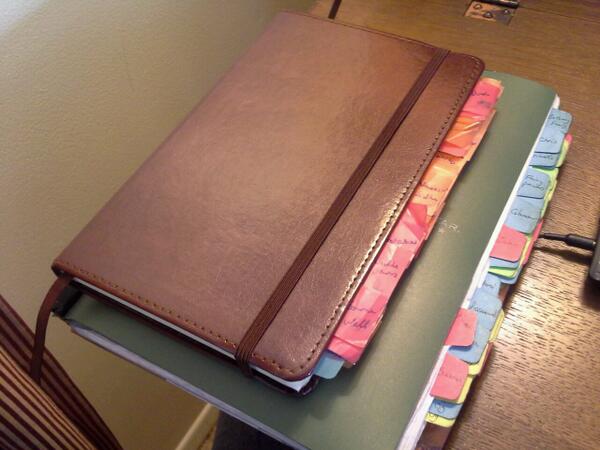
So now, whenever I am struggling with my manuscript, I set it aside and choose another character to write about, or pick a moment in the past to write about.  Then when I come back to the main manuscript, more often than not, I have a much better idea of how to proceed.  It makes sense; if you got stuck writing an article or nonfiction topic, it would probably be because you need to do more research.  These side stories are “research” on my characters.  I have pages and pages of notes…

notes


…but for some reason it doesn’t all become “real” to me until I write it in prose form.  My characters tell me things I hadn’t known before when they start interacting with others.

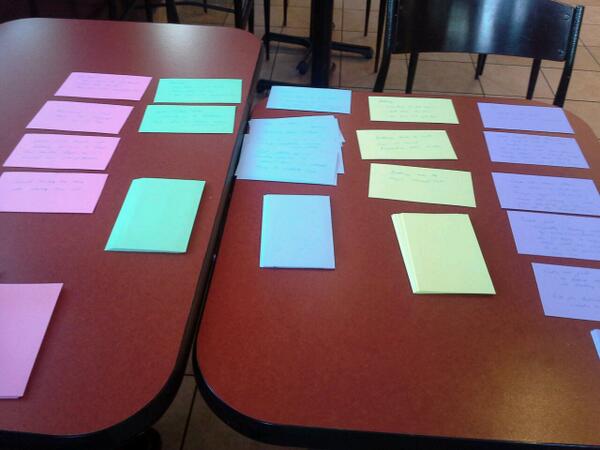
Right now I am finally working on the climactic scene of my work-in-progress, a scene where five characters and their messy hopes, desires, and insecurities collides.  I tried plotting it using color-coded index cards…

cards

…scribbling notes in notebooks, adding half-formed notes to Word documents.  And I have been working on this scene from the other characters’ points of view first, starting with the villain.  (Writing in her point of view may not be healthy, but it’s useful.)

So here’s my resolution: I am no longer going to let myself feel guilty about this.  It’s not a waste of time.  It’s necessary to make the final product better, because when it comes to writing a great story, there’s just no way to rush it.