Category Archives: Read This

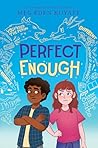
Read This!: PERFECT ENOUGH by Meg Eden Kuyatt

Perfect Enough (Good Different #2)Perfect Enough by Meg Eden Kuyatt
Summary: Selah is a dragon. Or at least, she feels like one. And she finally figured out how to spread her wings and soar. Armed with her sensory tools, her notebooks and poems, and her newfound knowledge about her autism, Selah is heading to writing camp for the summer. She’s excited to work on her writing, perform at the final showcase, and to meet more kids like her. Things aren’t so simple though. As soon as she arrives, she realizes that her bully from home is there too. Ezra is chaotic, attention-seeking, and always teasing her. Selah is determined not to let him ruin her summer. But soon it turns out that it’s not just Ezra causing problems. . . . As kind and enthusiastic as Selah’s new friends are, they don’t fully understand her autism and how overwhelming this new environment is for her. Friend drama, classes, overstimulation, and her relationship with Ezra all start to feel like a lot. But surely Selah can make it through just a few weeks without reaching her breaking point again . . . right?

This delightful sequel to Good Different follows Selah as she enters the brave new world of writing camp, armed with the autism diagnosis she received in the first book, and plenty of tools to help her manage sensory overwhelm. But a new environment and new friends come with lots of new challenges. Selah overcomes her negative previous impressions to become friends with Ezra, a boy from her old school. Even though they declare themselves “brain cousins” in neurodivergence, Selah soon realizes that her autism and Ezra’s ADHD express themselves in very different ways. Add to that the exciting (but sometimes overwhelming) experience of rooming with two new friends who share many of her interests but don’t understand her boundaries. (“Rumors say autistic people aren’t good at social cues,” she says, “but I don’t know where that came from because it seems to me that other people don’t get my obvious cues to leave me alone.”) The author shows Selah’s mounting frustrations with her friends and herself in lyrical verse that often incorporates the forms featured in her writing classes. (Take note, language arts teachers! This book has SO many lesson extension possibilities, many of which are included in writing prompts in the backmatter.) My favorite thing about this story is its refusal to tack on a pat happy ending; the story’s conclusion is satisfying and completely earned, and emphasizes that real progress comes in many different forms. For Selah, that is about learning to answer the question: “How do you know what’s a good or bad uncomfortable? The kind that makes you grow or makes you melt down?”

PERFECT ENOUGH is out now.

View all my reviews

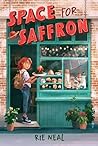
Read This!: SPACE FOR SAFFRON by Rie Neal

Space for SaffronSpace for Saffron by Rie Neal
Summary: Ten-year-old Saffron Sawyer loves science, experimenting, and learning new things. From making homemade slime in the back of her moms’ (Mama and Mimi) coffee shop to adopting tadpoles out of the river to learning how to fix bikes from watching YouTube videos, Saffron is confident she’s prepared for any challenge. But when Mama announces they are moving to Silicon Valley to take over Gran’s café, it’s Saffron’s biggest undertaking yet. Silicon Valley is very different from what Saffron’s used to. The streets are filled with electric cars instead of pick-up trucks, and instead of fixing their bikes, people buy new ones. Even worse, the coffee shop is struggling, and if it closes, Saffron and her moms will move again—leaving Gran behind. The one bright spot is Saffron has started at school just in time for the STEM Expo. Science has always been her favorite subject and she’s excited to present her project…until she sees the elaborate presentations her classmates have planned. Convinced she can never measure up, Saffron decides not to join the expo after all. But when Gran takes Saffron to a space-themed art installation in San Francisco, Saffron has an idea for a STEM Expo project that could help her win over her classmates—and maybe even save Gran’s café for good.

Saffron is a lovable space nerd who sometimes gets so excited to DO SCIENCE that she just can’t get out of her own way. After a particularly embarrassing disaster costs her mom her job, Saffron and her moms relocate to Silicon Valley to take over the ailing family cafe. It’s a whole new world for Saffron as she makes friends with the STEM-forward kids in Silicon Valley. When she figures out how to combine her STEM Expo project with an imaginative plan to save the cafe, she’ll need all hands on deck. Saffron’s deafness and her use of a BAHA (bone-anchored hearing aid) are woven naturally into the story, which is filled with humor, heart, and endearing characters.

SPACE FOR SAFFRON is out now.

View all my reviews

Read This!: CALL YOUR FATHER by Tracy C. Gold and Vivian Mineker

Call Your Father: A Tender Picture Book for DadsCall Your Father: A Tender Picture Book for Dads by Tracy C. Gold
Summary: From life’s highs to life’s lows, there’s one person who is always the first one we call: our father. He’s the one we want to comfort us, to wipe our tears, and to share our triumphs. Whether it’s falling off your bike or building your first crib, you can never have too many reasons to call your father. In this beautiful and relatable picture book, follow a father and son through the years as they face each new stage of life together. Accompanied by gentle rhymes from Tracy C. Gold and tender illustrations from Vivian Mineker, this book delivers the powerful and touching message that you are never too old to need your father. The perfect gift for the fathers or grandfathers in your life who always answer the call, this picture book just might make dad cry.

A poignant companion to Gold and Mineker’s previous collaboration, Call Your Mother, this book is a perfect gift for father figures of all kinds. We follow the protagonist from the time he is a little baby rolling on the rug, babbling “Ba ba ba! Da da da!” through the challenges of growing up, from skinned knees to speaking up for classmates, and on into the college years and ultimately becoming a father himself. At every stage, the refrain is the same: “Call your father”…and he always shows up. Gold’s moving text, accompanied by Mineker’s colorful illustrations, shows how the details of Dad’s support might change over the years, but his caring presence remains constant.

CALL YOUR FATHER is out now.

View all my reviews

Read This!: THE GALLAUDET ELEVEN by Kerry O’Malley Cerra

The Gallaudet Eleven: The Story of NASA's Deaf BioastronautsThe Gallaudet Eleven: The Story of NASA’s Deaf Bioastronauts by Kerry O’Malley Cerra. Illustrated by Kristina Gehrmann
Summary: Take a look inside one part of the journey to the moon, and meet the Gallaudet Eleven: the brave volunteers who helped make it possible. These hidden figures played an important role in NASA’s research, and it was their shared disability that made them so vital to the plan: their vestibular systems, a part of the inner ear, did not work, meaning they did not get motion sick. The Gallaudet Eleven were the perfect volunteers for NASA’s spinning, whirling tests to learn the effects of space travel on the human body.

In this groundbreaking nonfiction picture book, Deaf author Kerry O’Malley Cerra and Deaf illustrator Kristina Gehrmann bring forth the long-overlooked story of eleven Deaf men who participated in NASA experiments for ten years to help researchers understand motion sickness. The text lays out the hows and whys in an engaging and child-friendly way, incorporating quotes from the bioastronauts themselves and leaning into the humor. Gehrmann’s illustrations capture the joy and humor as well; one memorable spread shows the Deaf bioastronauts, chosen because of their inability to feel motion sickness, gleefully playing cards while the researchers on their ship loll in bed, too sick to work during a churning storm. It’s a readaloud perfect for the classroom, with lots of extension possibilities in the backmatter, including an author’s note, more facts, and a timeline of the Space Race. The book is also an ideal springboard for discussion about who gets to participate in scientific study. Quite simply an essential nonfiction picture book.

THE GALLAUDET ELEVEN is out now.

View all my reviews

Read This!: ARTICULATE: A DEAF MEMOIR OF VOICE by Rachel Kolb

Articulate: A Deaf Memoir of VoiceArticulate: A Deaf Memoir of Voice by Rachel Kolb
Summary: Rachel Kolb was born profoundly deaf the same year that the Americans with Disabilities Act (ADA) was passed, and she grew up as part of the first generation of deaf people with legal rights to accessibility services. Still, from a young age, she contorted herself to expectations set by a world that prioritizes hearing people. So she learned to speak through speech therapy and to piece together missing sounds through lipreading and an eventual cochlear implant, all while finding clarity and meaning in American Sign Language (ASL) and written literature. Kolb blends personal narrative with cultural commentary to explore the different layers of deafness, language, and voice. She deconstructs multisensory experiences of language, examining the cultural importance hearing people attach to sound, the inner labyrinths of speech therapy, the murkiness of lipreading, and her lifelong intimacy with written English. And she uses her own experiences to illuminate the complexities of disability access, partnerships with ASL interpreters, Deaf culture and d/Deaf identity, and the perception versus reality of deafness.

Many hearing people, if they think of deaf people at all, tend to make generalizations—either they sign, or they speak and speechread. Either they spend all their time in the Deaf community or they are fully integrated into the hearing world.

But as Rachel Kolb’s thoughtful and compelling new memoir shows, every deaf person contains “Whitmanian multitudes,” learning to navigate the Deaf and hearing worlds in different ways at different times and with different tools, employing signs, speech, writing, reading, gesture, technology, bureaucracy, and millions of other means to communicate and find one’s way. Kolb explores concepts that will be familiar to many in the Deaf community—speech therapy, navigating mainstream schooling, working with interpreters, slogging through the bureaucracy of accommodations requests, deciding which hills to die on when it comes to fighting for the rights granted under the Americans with Disabilities Act. Kolb grounds her essays in her own experience, weaving deft storytelling about growing up deaf in a hearing family who (thankfully, and unusually) chose to learn ASL, as well as her experiences pursuing advanced education at Stanford, Oxford, Emory, and Harvard. From these personal narratives, Kolb teases out thoughtful reflections about the ups and downs of access for deaf and disabled people post-ADA. As an interpreter, I especially appreciated her discussion of working with interpreters and the differences between working with professional interpreters and what she calls “friendterpreting,” when a signing friend provides more basic access in informal situations. A terrific read for hearing, hard of hearing, and deaf readers alike.

ARTICULATE is out now.

View all my reviews