Category Archives: On Life

Happy Thanksgiving!

A few things I am grateful for, in no particular order:

1) My family, especially my ten-year-old son, who gets excited about publishing stuff even when he doesn’t understand it and who regularly gives me pep talks without even realizing it.

2)The chance to immerse myself in stories and to be able to share them with other people. Basically, the wonder of writing.

3) The break I have given myself from writing for the last two weeks. Basically, the wonder of not writing. Continue reading Happy Thanksgiving!

GeekyCon Recap

A couple of weeks ago I got to go to my first GeekyCon, and it was fabulous!  I left the con and went directly to a camp in the woods, which is why I haven’t gotten to post about it until now.  A week and a half after leaving Orlando, here are the moments that stuck with me:

20150730_1731201. Being incredibly proud of founders Melissa Anelli and Stephanie Dornhelm as they received a “Geek Day” proclamation from the Orange County Commissioner.


20150731_1025242. Watching my good friend Megan Morrison discuss topics such as likable protagonists and  making old stories new alongside authors like Taherah Mafi, Ransom Riggs, Holly Black, and Cynthia Leitich Smith (all of whom, by the way, totally recognized Megan as a fandom authority).

3. Getting signed copies of books by Stephanie Perkins, Courtney Summers, and Marie Lu.  I was pretty much tongue-tied and starstruck.  (And getting to reread Stephanie Perkins’ Isla and the Happily Ever After at camp.  It was even better than I remembered.)

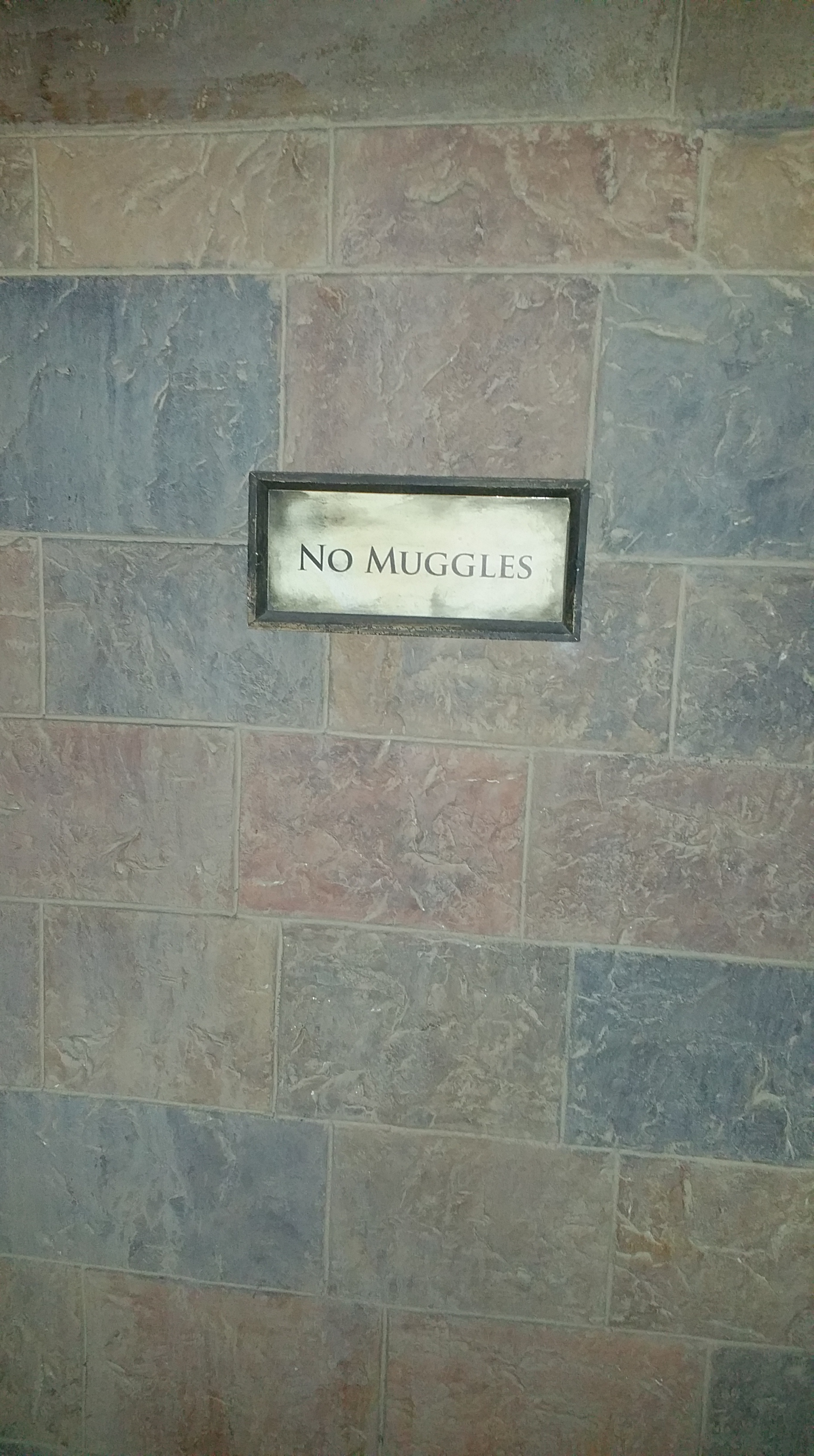
4. This sign in the bookstore:

20150730_160803


5. Co-presenting a session on fanfiction as a launching pad for original writing with my pal Megan, and reliving our shipping days.

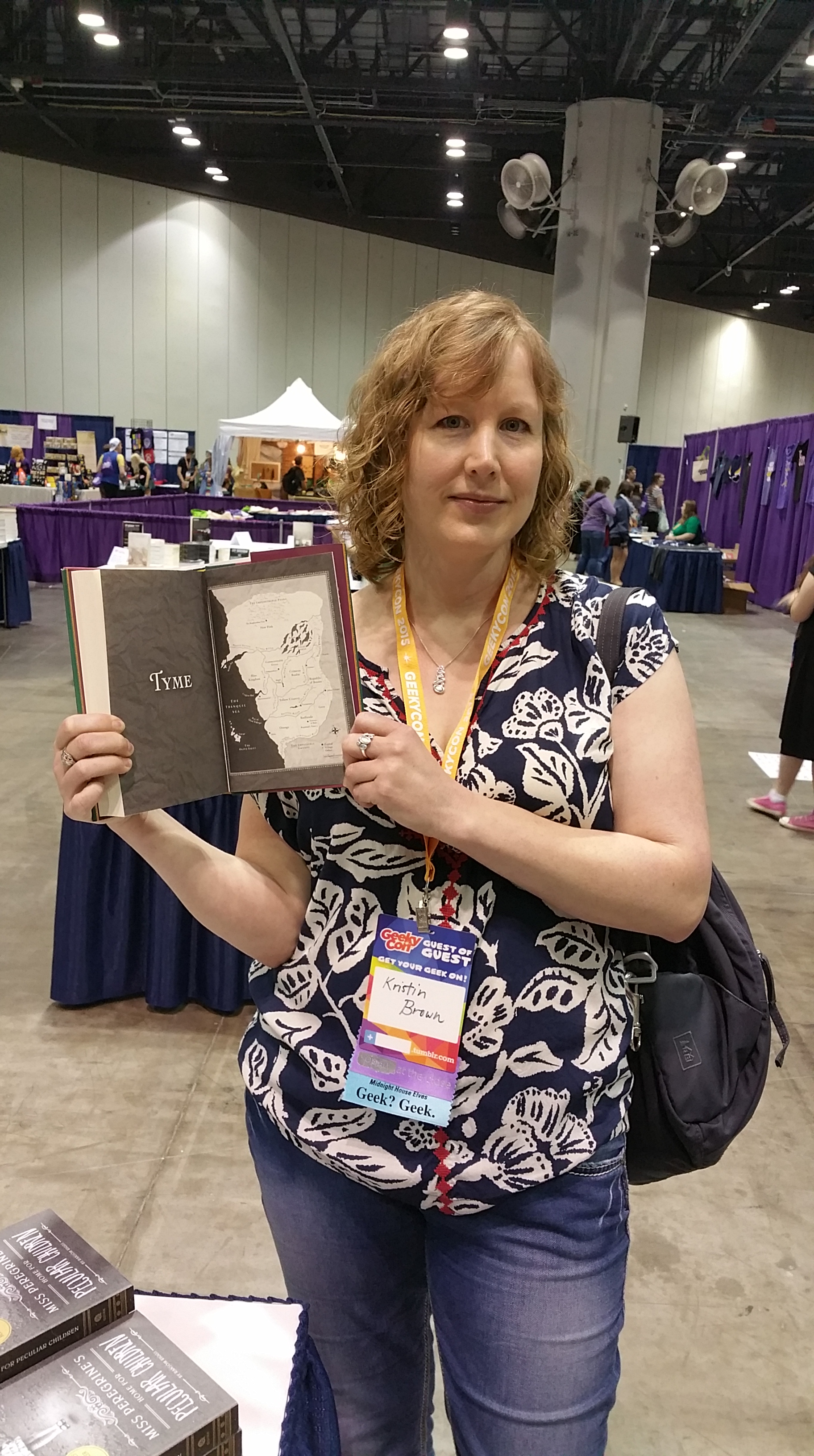
6. Getting20150730_160103 the map in the back of Megan’s book, Grounded: The Adventures of Rapunzel signed by mapmaker Kristin Brown.


7. 20150729_232727The opening event at the Wizard World of Harry Potter.  A bunch of Harry Potter fans having the whole place to themselves?  It was awesome.  And my son was chosen to be measured for a wand at the Ollivander’s Experience. I’m not sure who was giddier – him, or the superfan adults watching it all go down.


Libraries and Camps and Bookcart Drill Teams: The Long Twisty Journey from There to Here

Dawn Babb Prochovnic, author of the “Story Time with Signs and Rhymes” series, was kind enough to interview me on her blog about Little Hands and Big Hands and signing with children:

An Interview with Kathy MacMillan

I initially entitled this post “An Interview with Author, Kathy MacMillan,” but in addition to being an author of several books, Kathy is also an ASL interpreter, sign language workshop presenter, a trained librarian (and probably a host of other things I haven’t learned about quite yet!).

I was first “introduced” to Kathy when I read her book, “Little Hands and Big Hands: Children and Adults Signing Together.” Kathy and I share a love for signing with hearing children of all ages, and I really connected with her simple, accessible approach to signing with kids. I did a little research and found out that she is the author of several other books (some of which are pictured later), and she blogs and presents regularly at libraries and other community venues.

I wanted to get to know Kathy a bit better, and she was kind enough to participate in an interview:

Dawn: How did you first become interested in sign language (and in particular, signing with hearing children)?

Find out the answer – and lots more – in the full interview here.

Use It

My nine-year-old is away from home for the first time this week, away on a school trip.  I know he’s having a wonderful time and I am so glad he has this opportunity, but missing him is like gastrointestinal distress or a mouth ulcer – a constant, unpleasant presence that could flare up into pain at any moment.  I know he’s not a baby anymore, but come on, he’ll always be my baby.

I’m also working on a revision this week, and I happen to at a part of the story where my protagonist has suffered a devastating loss.  So at least I can harness the pain of the temporarily empty nest…

Everyday Evil

I recently finished The Lucifer Effect: Understanding How Good People Turn Evil by Philip Zimbardo (Random House, 2007).cover of The Lucifer Effect

This book was extremely hard to read.

So hard, in fact, that I actually used up all twenty renewals on the library copy I had, and had to return it and get a new copy.   (That means it took me over a year to read the whole thing.)  I would read a chapter or two, and then need to put it down.  The descriptions of real-life evil acts conducted by ordinary people were just too intense to bear for long.  Sometimes it was weeks before I could pick the book up again.

Zimbardo is best known as the head of the Stanford Prison Experiment, a seminal experiment in social psychology in which middle-class 1970s college students played the roles of prisoners and guards while researchers explored the powerful effects of situation in shaping behavior.  The experiment was shut down prematurely when the situation drew out dehumanizing tendencies not only in guards, but in the researchers themselves, who played administrators in the false prison.  Rattled by the personal and professional effects of the experiment, Zimbardo has made it his life’s work to pursue an understanding of how situational factors influence human behavior.  In this book, he describes the experiment in sometimes painful detail and connects its lessons with other atrocities of aggression and omission, from the abuses of prisoners at Abu Ghraib to the murder of Kitty Genovese.

We Americans, in particular, tend to think of ourselves as unique individuals, deciding our own fates, but research shows that we all have “situated identities” – that is, we behave in different ways in different situations, and those ways are shockingly easy to predict.  In fact, Zimbardo argues that it’s easy to predict your behavior based on your ethnicity, social class, education, religion, and where you live – with no knowledge of your social class at all.

If our identities are largely socially constructed, then it make sense that good people often fall prey to situational logic, where our involvement in a group may encourage us redefine our behavior as something better than it is, lose our sense of personal responsibility, or dehumanize others because the group demands it.  Anyone who has experienced middle school knows that this is so – what disturbs me most is that the evidence shows that we don’t necessarily grow out of it.

We can’t be hermits, so we have to maintain our critical facilities at all times.  Zimbardo says this best: “We must regularly assess the worth of our social involvements.  The challenge for each of us is how best to oscillate between two poles, immersing fully and distancing appropriately.”

As fiction writers, we need to be keenly aware of the pull of situational factors on our characters.  It’s not enough to know that a character is spunky, or passive, or riddled with self-doubt, or charismatic.  Even more important to his or her behavior is the setting, the social expectations, the groups of which the character is a member.

Though The Lucifer Effect was a difficult read, I am glad I made it through.  The book maintains unflinching allegiance to the truth, to the underlying belief that shines through even the darkest descriptions that, while evil is frighteningly banal, so is heroism.  Because in the end, Zimbardo illuminates the fact that “we are all heroes in waiting”.